
Does a Career in the Arts Leave you Forever in Debt?
November 26, 2015Nadia and Violet, aka ‘WeTalk A lot”. The duo interview, Radio 1xtra & Asian Network presenter Mim Shaikh, and Radio producer Dan Moss. They also conduct their own twitter poll. Hear what they found out.
Is London’s Reputation over as a Creative Leader?
November 26, 2015Is London’s Reputation over as a Creative Leader? Linnet Butesi asks two London based artists what they think?
.
Do rapid changes in technology make it easier to make and share new work?
November 26, 2015A blog by Andre-Omari John:

My name is Andre-Omari, I’m 23, and I’m going to use this blog post to explore the part technology plays in creating and sharing new work to bigger audiences, what its pros and cons are.
Recently I was pondering a question that is much asked: Do rapid changes in technology make it easier to make and share new work? Few people, me included, would say anything other than a resounding yes, of course, and with good reason.
Technological gains have revolutionised the way in which people connect, transforming Earth from one-dimensional deictic expressions into multifaceted networks whereby people, places, and ideas are all linked.
Long ago the only way to get ideas across was to speak directly to the person.
Things changed when people started using pictures and paintings. Dating as far back as 220 AD, China, where a method known as woodblock printing was the commonplace technique for the spreading of ideas, to ancient Egypt where hieroglyphics were the norm. These techniques were specific to time and place, one still had to physically be there to gain the wealth of information they held.
Mankind had made significant gains in the way of communication when printing was first being established in the 15thcentury. There was a profound ‘properness’ to how messages were received, and it was generally the right of the upper classes to be privy to such information; as commoners, or working classes as we know them today, were distinctly devoid of any reading or writing ability.
Fast-forward a few hundred years and the industrial revolution completely changed the face of time and space. With the revolution came roads, trains, cars, ideas were able to travel at a much faster pace.
The rise of technology has made it possible to receive messages instantly via emails, text messaging, WhatsApp, and social media platforms such as Twitter, Facebook, and YouTube. Those latter three social mediums are also an excellent means of exposing ones talent to the world, thus making it easier to discover gifted individuals.
There have been many success stories, Justin Bieber arguably most notable among them. Because of his YouTube channel he was able to get noticed, and is now a massive success worldwide. Additionally there is a YouTube user named PewDiePie, who focuses on streaming video games and providing commentary. His meteoric rise began in 2010, when he joined YouTube, and he is now the most subscribed user, with over 40 million followers.
However there is an argument that social mediums are inherently flawed. They are run through machines which, at the end of the day, are not infallible. Technology rising has brought about the rise of hackers, and while these people tend to focus on the big fish, (corporations and banks) artists who use computers are inevitably at some risk of having their work stolen.
The way forward is bigger emphasis on encryption technology that better safeguards people’s work. In ten years’ time the way we compute will again change radically. The current paradigm of IPhone chronologies, and smartphones which are essentially the same tool, will not continue as the public veer toward wearable technology, and ultimately holographic technology.
I began this post asking whether changes in technology make it easier to make and share new work. I have evidenced the ways in which technology make it easier to communicate and create and market oneself. Also I have touched upon its potential for harm and the caution artists need to ensure their works safety. The ease with which content can be pushed out there may make it simple to temporarily discredit a person, however, their talent and creativity can never be stifled…as long as pens and paper never go out of fashion.
The Art of Minecraft
November 26, 2015Vlog:
Self-confessed Gamer and Minecraft expert Revell argues the case for Minecraft as an art form.
Student Debt and Opportunities
November 26, 2015Blog by Ruth Eghagha:
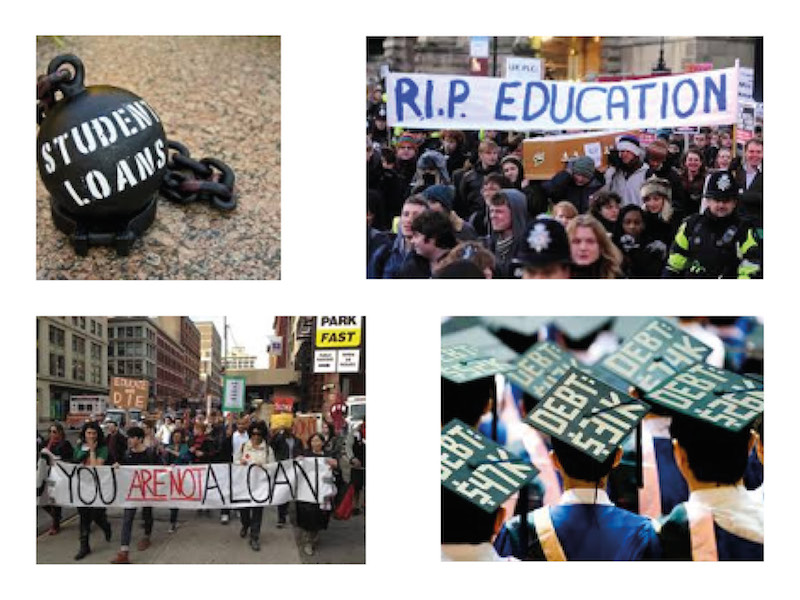
Hi my name is Ruth. I am 20 years of age. I’m an optimistic young individual who is eager to learn and I have bright ambitions for the future.
Right, today I’m discussing the pros and cons of going to university and the impact of student debt, in the aim of answering the question: is there equal opportunity in London?
I myself have not studied at university and so I have mixed feelings about the values and outcomes of a university education. Currently, I don’t believe that the debt incurred by attaining a university education is as overwhelming and crippling as a number of people may perceive it to be. I have this point of view because, according to the research I have carried out, if you have attended university in or after 1st of September 2012 “Fees only have to be paid back when graduates reach a certain salary threshold “(over £21,000). Graduates pay back 9% of their salary a year, which at £22,000 a year, equates to £7.50 a month. Hence, in theory, one who ‘doesn’t benefit’ from university learning life ie who doesn’t go, does not need to repay any debt.” Thus, it doesn’t seem that bad.
So why do people feel so negative about student debt and going to university? In my opinion, people just assume that either they or their children will be crushed by up to £44,000 of student debt following an increase in tuition fees post 2012. Nevertheless, according to www.studentloanrepayment.co.uk your student debt is wiped out after 30 years. To find out more, I’m going to interview 1 graduate and 1 non-graduate to see things from their perspective.
Firstly I spoke to Maria:
What’s your age? 22
What’s your ethnic origin? White British
Where did you go to university? N/A
Where did you go to Secondary school? Barking
Where did you go to sixth form? Barking
Are you employed? Yes
What’s your profession? Programme Coordinator
What’s your salary? Prefer not to say
Did you ever consider going to university? Why didn’t you go? I did consider it. I wasn’t very academic at school and I wasn’t really sure what to go on and study. I thought it would be better for me to go straight into work and start building up my work experience.
Do you think you would have had more opportunities if you had gone to university? Perhaps, I may have been able to apply for more senior jobs sooner. I am happy at my career choices so far. I work for a great company that is keen to support me to do well and progress within my career.”
Next I spoke to Jill Richens – Jill works as a Development and Fundraising Officer at a London Charity.
What course did you study at University?
I studied for Geography, so, a BA in Geography, which was a 3-year course.
What is your ethnic origin?
White British
How old are you?
I’m 25
When did you go to University?
I went to Uni in September 2008. It’s a 3-year course so I graduated in September 2011.
How do you find managing your finances?
I find it difficult. I think everyone my age in London does. I think a lot of people of all ages do. That’s because rent is such a significant portion (of living expenses) and I did a lot of internships, things like that.
Do you find it easy to stick to your budget?
Yes, because I think that my payments are quite regular. The only things that really change are unexpected bills and things liked that. So, you have Council Tax, which comes in quarterly and then rent every month and then like Netflix and other subscriptions. So I always know how much I have, I had a pay rise last year and that’s made it so much easier. That’s just given me a tiny bit more room. It’s easier now but it wasn’t easy a year ago.
Have you felt the effects of student loans?
I’ve never paid any of my student loan off directly, because the first year of me being out of university I did a paid internship. So, I was never paying anything back because you only have to pay back when you earn over a certain salary. So I wasn’t earning any salary and then after that, I had a discussion with my Dad about how I was going to pay the loan off over time; and he has upfront paid it all off and I’m going to pay him back over time so that we don’t accrue interest on it. So when I graduated, I had about £17,000 worth of student loans and that would have increased probably by this point because I’ve not been earning enough. It could be even more than £17,000: it could be £19,000 or £20,000 right now. So, we had a discussion of getting him to pay it and then for me to pay back that sum.
What’s your salary?
£20,000 (approximately)
Is there anyone that you are responsible for?
No. I live with my friends. So, I’m not responsible for them, I don’t have any children or anything like that. My younger brother – he’s a year younger than me – he’s very heavily disabled. So I have like a caring responsibility with him – he lives back in Manchester with my family. I have a role to look after him in the sense that I go back home regularly; but it’s not really a financial responsibility, it’s more of a ‘time’ responsibility.
Did you ever do any work relating to your degree?
Right, so I did Geography at university and I focused on global poverty and development and then from that I went into charities. So I started off in a charity focusing on HIV and AIDS. It’s based in Manchester so I worked there and I worked in Uganda and Malawi, so I sort of flittered between the two only to go to Uganda twice so I was doing fundraising to raise money for those charities. Then, after that, I went to Canada to work with another charity. I worked with a charity called PLAN…It’s mainly about girls, education and things like that. Then, for the last two years I’ve been at this job doing fundraising so I’ve always been a fundraiser.
Does your current job relate to your degree?
It does and it doesn’t actually because Geography can be anything you want it to be because it’s about the world. So … yes, it relates to Geography because you can make it sound like it does and because Geography can be about how do we use London’s resources in the best way to benefit the most people? So that’s about Geography but really what I cared about in my degree was Global Health – so that’s why I worked for the HIV and AIDS charity. That doesn’t relate to this but I do still keep in contact with that charity, I still just like a volunteer and help out.
Do you think you would have gotten a job without your degree?
I would have got a job, yeah but what my degree taught me to do – basically the key function of my role is writing. You know like research, evidence, case-making stuff and my degree taught me how to make that case. It taught me how to write, it taught me how to structure arguments. It would have been a lot harder if hadn’t had a degree but not impossible.”
So there you have it. Two women, still in the early stages of their careers, both have good jobs with opportunities for promotion and seem to be being valued by the companies that they work for. One who went to University and one who didn’t.
I think that the conclusion I would draw from my research is that it is Ok to go to University if you find a course that you are passionate about and are really interested in and if you are lucky like Jill and even if you don’t get a helping hand – there are even ways of dealing with student debt and structured support routes to pay it off slowly and when you are earning a certain amount. However, it is not the only route and if you choose not to go to University there are all kinds of pathways like apprenticeship and employability programmes run by companies who will train you and support you to get to where you want to get without a degree that suits them better. We are all different so we have to make the right choices for us as individuals and according to our ambitions, skill sets and circumstances. So, I still feel optimistic that it is possible to take either path and do Ok and that London can be an equal place to look for work in. I hope you’ve enjoyed reading my blog post.
How to get your message out there
November 24, 2015Vlog
Lubna wrestles with getting started on youtube and interviews a successful blogger and author on how she uses social media to her advantage.
Visit Lubna’s Youtube channel to see more of her vlogs.